
All things dating: Dating fatigue, loneliness and dating in 2026
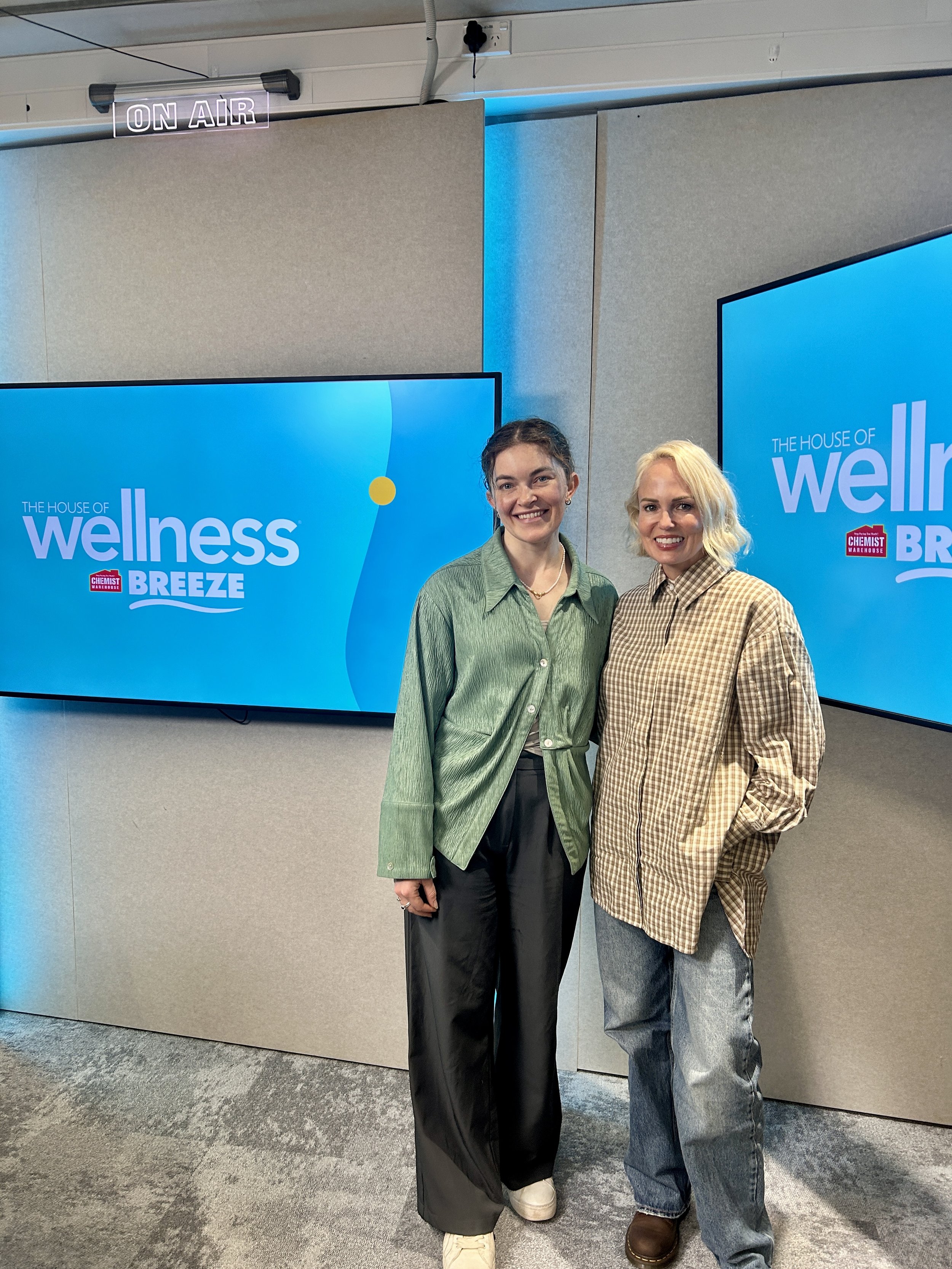
Compatico CEO Elise Dalrymple-Keast interviewed by Carolyn Taylor on the Breeze House of Wellness podcast. Sunday 5th July 2026.
Dating may look very different to how it did a decade ago, but one thing hasn't changed: people still want meaningful relationships.
Compatico CEO Elise Dalrymple Keast recently joined Carolyn Taylor on The Breeze House of Wellness podcast to talk about the realities of modern dating, what Kiwi singles are experiencing, and why there's more reason to be optimistic than many people realise.
Here are some of the biggest takeaways from the conversation.
Dating hasn't become impossible. It's simply changed.
Earlier this year, Compatico surveyed more than 400 Kiwi singles as part of The State of Dating. One finding stood out immediately: fewer than one in ten people currently find dating exciting.
Why? For many, the places people once met naturally have disappeared. Bars feel less social, approaching someone can feel awkward, and dating apps have shifted from being exciting to feeling like a second job.
The encouraging news is that singles aren't giving up on finding love. They're simply looking for better ways to meet.
Chemistry is something you experience, not something you swipe on.
One of the most interesting discussions centred around just how much we miss when we're making decisions from a profile. Shared values, humour, kindness, confidence, emotional intelligence and the way someone makes you feel rarely fit into six photos and a short bio. Elise shared her own story of meeting her partner. On paper, they probably wouldn't have matched. Their hobbies looked completely different, yet meeting in person revealed the qualities that mattered most. Today, they share an incredible relationship built on mutual respect, support and discovering new interests together. Sometimes the best match isn't the one you would have chosen with your thumb.
The strongest relationships often begin with an open mind.
One of the biggest messages from the interview was that compatibility isn't about finding someone who ticks every box. Many of Compatico's most successful introductions happen because someone said yes to meeting a person they may have overlooked at first glance. The team even encourages members to give promising introductions a genuine chance. Chemistry often grows through conversation, shared experiences and getting to know someone beyond a first impression.
Experience can be one of your greatest advantages.
One of the surprises from the conversation was that Compatico's highest number of successful couples are aged 70 and over. Why? Because many have a clearer understanding of what truly matters. They're less focused on superficial qualities and more interested in kindness, companionship, shared values and enjoying life together. It's a reminder that finding love isn't reserved for one stage of life. In many ways, it becomes easier when you know yourself better.
The future of dating is becoming more human.
What Elise is most excited about is the shift that's already happening. As more people step away from endless swiping, they're choosing real conversations, shared experiences and introductions made by people who genuinely understand them. Compatico has seen growing demand for everything from member mixers to Hot & Single events, reflecting a wider movement towards meeting face to face again. Technology has changed the way we meet, but it hasn't changed what we're looking for.
At Compatico, our mission is simple: to be where healthy relationships begin. Whether that's through one thoughtful introduction, a conversation at an event or simply helping someone see dating differently.
Because sometimes, the person you're looking for isn't the one who looks perfect on paper. They're the one you simply needed the opportunity to meet.
Or read the transcript below:
All things dating: Dating fatigue, loneliness, and dating in 2026
The Breeze – House of Wellness | Sunday 5th July 6, 2026
Carolyn Taylor interviews Compatico CEO Elise Dalrymple-Keast
Carolyn: I'm really excited because dating has changed dramatically over the past decade. Swiping, matching and messaging have become the norm, and yet many people say they're feeling more disconnected now than ever.
Joining us today is Elise Dalrymple Keast, CEO of Compatico, to help unpack those realities of modern dating, the science, yes there's science behind meaningful connection, and to share some really practical advice for anyone looking for love in 2026.
Elise, welcome to the show.
Now, what would you say the dating landscape looks like? What's the big picture of dating in 2026?
Elise: Well, we at Compatico ran a survey called The State of Dating earlier this year. We surveyed over 400 Kiwi singles, and the results were that fewer than one in ten find dating exciting at the moment.
Carolyn: Fewer than one in ten! What happened to the good old days where you used to just organise a community party and put on your glad rags and see who you bumped into on the dance floor? Ah, it's so depressing.
Elise: It has changed a lot. When we're onboarding clients, some of them might have come out of a marriage or a long-term relationship, and so they say, "The last time that I was on the market, you could go to a bar, and you could get chatting to someone who you thought was good looking, and you could meet."
But nowadays that’s seen as creepy, or people are just on their phones at the bars, and no one wants to interact with you anyway. So it's completely foreign.
And then even for younger people, they're going out and, again, at the bar, you can't approach...
Carolyn: Well, they're in a cluster, aren't they? The younger people. They're kind of there just for each other, and they choose their social circle. So good luck to you if you want to crack into that.
Elise: Totally. And people are videoing on their phones as well. It's much less private than it used to be.
And then the dating app fatigue is through the roof. A Forbes study found that 78% of singles are completely over the apps, which we can see in the way that Bumble and Tinder, all of their share prices are falling because young people are not engaging with them.
Carolyn: It's so sad. Maybe a decade or so ago now, when Tinder was all the rage and stuff, I've got a few friends who are now married because of meeting on Tinder or meeting on Bumble.
And now it's just that case of, "Yeah, right. Good luck."
Elise: Totally. And look, there are success stories, and it is really good to have free tools available for people. And for some people they do work.
It's just that it's diminishing, and you really do have to treat it like a part-time job, swiping all the time.
The average man has to swipe right a thousand times to get a single coffee date.
Carolyn: That's brutal.
Elise: Whereas women are just inundated, and so then women can get a bad rap for ghosting or not responding.
But I remember from my days on the apps thinking, "Guys, my admin is too high." I cannot keep up with the demand. I was like, "I can't do that to my friends this much, let alone, you know..."
And so then you start filtering on increasingly shallow criteria, and that's just not great.
Carolyn: I think you've just put your finger on what my gut feel is about it.
I mean, because I've tried online dating. And it's that thing of, in real life, I would go through my adult life, I'm in my mid-40s now, and you go, "Okay, cool. So I've dated this person, this person, this person."
And if I was only shown their photo, I probably wouldn't have swiped right. But I chose because of how they show up in the world, and how they communicate, or what they do, or energetically, or how they smell, all that stuff you do not get just from a photo.
And I would have ruled myself out of being in those, mostly, cool relationships.
Elise: Totally.
My partner, who is amazing, I think we wouldn't have matched on an app.
He's amazing, but our interests, especially at the time when we met, were actually on paper very, very different.
I thought it was really important that we both shared those same interests immediately. And hiking and the gym are really high on my list, and that just wasn't him. He's into Dungeons & Dragons.
Now he still does his Dungeons & Dragons, but we do hikes and runs together. Then I also have friends who I do the really hardcore hikes with.
We have this really amazing relationship, but that only happened because I met him in real life, because he was my flatmate at the time.
Through the apps I would have been like, "Oh no, we have nothing in common," which is just so not the case.
Carolyn: Yeah, that's an interesting one.
How does Compatico work to rule out, I guess, a bit of time? Just that time, admin-heavy, maybe it's this swipe, maybe it's this swipe.
How does Compatico work?
Elise: So when people join us, they choose their membership tier, and that depends on the level of support and priority that they want to get.
So we interview everyone, and then off the back of that, write their profile. Usually people enjoy that process.
Carolyn: What are some of the questions you ask in the interview? Are they just predictable, or are they kind of almost like a psychological profile as well? How deep does it get?
Elise: It can get pretty deep, but we try to make it more of a conversation.
So we are trying to find out things like relationship history, and if there have been any learnings out of that, what you like to do on a day-to-day basis, your hobbies and interests, what you're looking for, what your social network and social circle are like.
We sort of know those are the outcomes that we want, but we do try and let it flow naturally so that people don't come in being like, "Oh my God, this is a job interview," which is not what it's like. We tend to run it more like a conversation.
So once we've got a photo and we've got their profile, and we do police checks on everyone, then they're in the system and we get in touch.
Carolyn: It's like they've got a dating blue tick.
Elise: Yeah.
Carolyn: It's kind of like, right, you're good to go.
Elise: Yeah, exactly.
Carolyn: Vibe check.
Elise: Yeah, exactly.
Carolyn: How cool.
And so then what? You've kind of got this magical spreadsheet that does a bit of magic matching, and names get joined together and a golden star appears?
How does it work? How do these matches become real?
Elise: From the back end, we have systems that help us provide suggestions with crossover in terms of, "These people have similar interests," or similar ages.
But then we go through every single one and say yes or no, because sometimes there are things like, yes, they could be the right ages and the right interests, but actually they're from completely different backgrounds and have completely different visions for life.
That's harder for a system to pick up, but that's something we know from having met those people. So we can say, "Actually, that's not really a good match."
Whereas sometimes there are people who might be ranked quite low in terms of crossover, but sometimes you're onboarding someone and you think, "I have the perfect person for you" in my mind.
Carolyn: That must be a cool feeling.
Elise: It is a really cool feeling.
But we do find that people... we try to say, "Hey, if we're recommending someone to you, go on the date. And if anything, go on three dates," because it's a good chance.
But sometimes people do just... we can think this is the perfect match, but people still decline.
And it is based on, I think, people filtering on the wrong things.
Carolyn: Yeah, and what are the wrong things?
I mean, it's that kind of 30-plus that's struggling in the dating world. You'd hope... I didn't have it together in my 30s by any stretch... but you'd hope by that age you go, "What I've been filtering things through in the relationship space has not been working. What can I do differently?"
You'd hope things would get stripped away.
Do you feel like part of the problem, as people age, is we're just not learning the lessons of what's actually important, and what makes a relationship solid outside of the glitz and glam of the aesthetic-looking thing for Instagram?
Elise: I totally agree.
In fact, the highest number of our successful couples are 70-plus.
Carolyn: Which is... I mean, it's really cool because it speaks to the companionship of a relationship, right?
It's not all Mills & Boon.
It's just like, you get up, you have a coffee, you get into your day. "Have a good day at work." "Bye." "Enjoy golf."
It's not this hyper-saucy, day-to-day vibe, really, is it? Being in a relationship with someone, in the real world, if you're living in the same house and all of that.
Elise: Exactly.
And it's not to say that physical intimacy isn't important to these people.
The people we get in their 70s are young 70s. They're out there. They're often maybe out on the farm, or they're doing sporting activities, or they've got really quite active, vibrant lifestyles.
Carolyn: I should put my mum in touch with you.
Elise: Oh, absolutely! She should be all over it.
Carolyn: But I think by that stage you're a little bit clearer on what actually is important.
So you kind of just let a lot of the unimportant stuff drop away.
Whereas I do find the younger you go, sometimes the more criteria people have.
Elise: We do say to people, "Compatico is a journey."
Our memberships are for a year, all of them.
The reason for that is usually the person you are at the other end is quite different, and the people you're willing to consider are quite different.
I think there's this thing where people say, "Oh, I shouldn't have to lower my standards."
But it's like... what if your standards are getting in your way?
Carolyn: Yeah... what's actually working about your standards?
Carolyn: Speaking of loneliness, obviously the longer it goes on in one's life, you can get used to it and really relish it, or it can become a mental health situation.
So how does one know when to go, "Okay, now's the time"? After being alone and having enjoyed it, something's switched. It's time I maybe put some effort into this relationship area of my life.
Elise: If you feel like you are emotionally reconciled with a previous relationship, however long that takes you, that is the time.
I think it can be really easy to be emotionally over something, and then get into this really great life and you've got this routine and you're super busy.
But the longer that you leave yourself in that state, the harder and harder it becomes to let someone else in, because people start viewing their life as a perfect jigsaw that's maybe missing one piece.
So they're like, "I just need that other person to be that piece and fit into my life."
But that's just not the reality, because that person has their own jigsaw.
Carolyn: It's like, "Why are you not fitting into my puzzle? Oh wait... what? You've got your own?"
Elise: Yeah, exactly.
Carolyn: Why can't you just conveniently fit it?
Elise: But then we wouldn't like that person, because they would be a total pushover.
So it's a really, really interesting dynamic.
But I would say, for people who say, "Oh, you know, I'm happy on my own forever" — that certainly exists, and that's absolutely fine.
If it's not a romantic relationship, you certainly need to have other companionship.
Having quality relationships in your life is one of the most impactful things that positively impacts life expectancy. It's even more powerful than quitting smoking.
So even if you're like, "Okay, romantic relationships aren't for me," make sure that you have friends. Make sure that you have family who you're in contact with every week, even people who you're in touch with every day if romantic relationships aren't for you.
But a romantic relationship is really amazing, and people who do have that have better sleep, better mental health outcomes and better physical health outcomes.
So, yeah, look, it's definitely not something to completely deprioritise.
Carolyn: Yeah. Well, also being lonely then affects the negatives of what you just said.
Sleep, all the things that negative loneliness gives a person.
Elise: Yeah, totally.
Your mental health plummets, and then just your physical health usually, because when it's just you, loneliness sometimes impacts our self-image.
So we stop eating well, we stop drinking enough water, we stop doing things that we know we should be doing to look after ourselves because we kind of start to think, "What's the point?"
Even getting out for a walk and movement drops with loneliness as well.
Look, some people can feel lonely and know, "Right, this is my sign that I need to get out there."
We've had an 80-year-old on our books who would walk 20 kilometres a day because it kept the loneliness at bay.
He's now happily met someone through Compatico, which is amazing, but he was just so proactive about saying, "Okay, this is what makes me feel better, therefore I know I need to do this."
Carolyn: And the wisdom to do it.
Just the building blocks and that maintenance of self.
So we end on a positive note. What are some encouraging trends?
Are people becoming more intentional about relationships?
Elise: Yeah, I think we've got real tailwinds at Compatico with people getting off the apps.
For instance, the events that we run. We do our member-only events, and then we've also done these Hot & Single workout classes, where we have different sessions for younger people and older people.
Those have been so popular, and we get requests all the time asking, "When is that happening next?"
Our events... we used to run them once a quarter, and now, in Auckland at least, we run two to three a month because the demand is so high.
I think people are recognising that the apps are not working for them, and they're wanting to find something different.
Matchmaking in New Zealand is relatively new. In the States it's very, very established, and in places like India it's been going on for centuries, really.
It's quite new here, but I think people are more and more starting to hear about it and starting to consider it.
For us, our mission is to be where healthy relationships begin.
We want to make matchmaking mainstream because we see it as a really viable alternative to endless swiping and being stuck behind a screen.
Carolyn: So tell us, where can we find you?
Elise: You can go to our website, compatico.co.nz, and you can book a call with our team, you can contact us via our form, or you can apply directly online.
Most people like to book a call with us first to find out if it's going to be the right fit for them.
Carolyn: Cool.
Well, thank you, Elise, for letting us know about Compatico on The House of Wellness this morning.
I expect that you may have an influx of emails on Monday morning to reply to.
Let us know how all those matches go.
Elise: Will do. Thank you for having me.
Carolyn: Sunday mornings on The House of Wellness.
Wondering if matchmaking could work for you? Book a call with our team to learn more.